
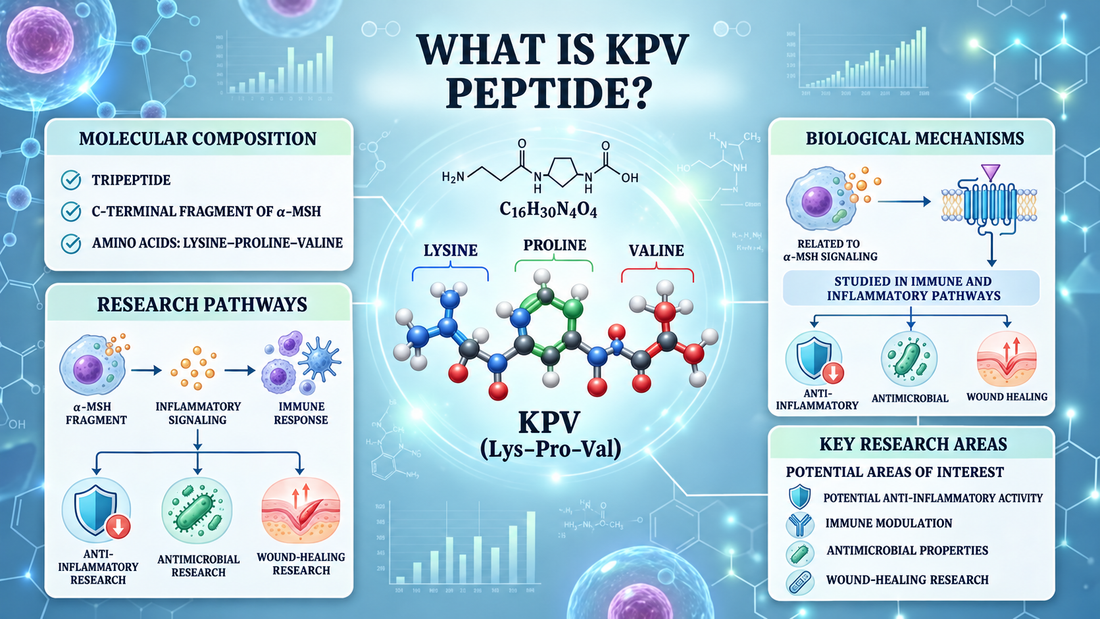
KPV peptide is a short chain of three amino acids: lysine, proline, and valine. It corresponds to the final three amino acids of alpha-melanocyte-stimulating hormone, also known as alpha-MSH. Researchers have investigated KPV for its effects on inflammatory signaling, intestinal inflammation, and antimicrobial activity.
Interest in KPV peptide benefits centers on these biological effects, but it is important to distinguish laboratory findings from established treatments. This guide explains how KPV works, what the research suggests, and what remains unknown about its use in humans.
How Does KPV Peptide Work?
One proposed mechanism involves PepT1, a transporter that carries small peptides into cells. In experiments using intestinal epithelial cells and immune cells, researchers found that KPV uptake through PepT1 was associated with reduced activation of NF-kappaB and MAPK, pathways involved in inflammatory signaling.
A study published in Gastroenterology reported reduced pro-inflammatory cytokine production in cell experiments and reduced inflammation in mouse models of colitis. These findings help explain why KPV has attracted attention in gut-health research.
Potential KPV Peptide Benefits: What the Research Shows
Anti-Inflammatory Activity
Inflammation is a central theme in KPV research. In a mouse study examining KPV and related melanocortin peptides, KPV reduced the accumulation of inflammatory white blood cells at the site of experimentally induced inflammation. The researchers also found that its activity differed from that of other melanocortin peptides.
This distinction matters: KPV is related to alpha-MSH, but the two should not be treated as interchangeable compounds with identical mechanisms or effects.
Gut Health and Intestinal Inflammation
The connection between KPV and gut health comes partly from experiments involving intestinal cells and chemically induced colitis in mice. Researchers observed changes in inflammatory signaling and cytokine expression after KPV exposure.
These results provide a basis for further investigation into intestinal inflammation. They do not establish that KPV treats Crohn's disease, ulcerative colitis, or other gastrointestinal conditions in people.
Skin Health and Wound-Healing Research
KPV and related peptides have also been discussed as candidates for skin and wound-healing research. A review in Experimental Dermatology explored their potential relevance to cutaneous wounds and skin ulcers.
However, findings involving alpha-MSH or modified peptide derivatives should not automatically be attributed to KPV. The review discusses possible future applications, rather than establishing KPV as a treatment for eczema, psoriasis, or chronic wounds.
Antimicrobial Activity
In laboratory research on alpha-MSH and its KPV fragment, investigators reported antimicrobial effects against Staphylococcus aureus and Candida albicans.
These experimental findings are relevant to research on the relationship between inflammation and host defense. They do not establish KPV as a replacement for antibiotics or antifungal medication.
KPV Peptide Formats and Dosage
KPV product listings include solid and liquid formats. At Nutritional Supplement Shop, examples include KPV Peptide Tablets and VitaPep KPV Peptide Serum. Consult the individual listings for composition, format, and research-use restrictions.
An evidence-based human KPV dosage has not been established. A quantity printed on a product label is not a clinically validated dosing recommendation, and doses used in animal experiments should not be treated as human protocols.
KPV Safety and Regulatory Considerations
The FDA's safety information for substances used in compounding states that the agency has not identified human exposure data for drug products containing KPV through any administration route. It also identifies important gaps in the information needed to assess whether KPV could cause harm in humans.
That means reliable conclusions about human side effects, long-term safety, and medication interactions cannot be drawn from the available evidence. A research-use label does not establish clinical safety or effectiveness.
People experiencing persistent digestive symptoms, skin problems, or other inflammatory conditions should discuss diagnosis and established treatment options with a qualified healthcare professional rather than rely on experimental peptide claims.
Explore KPV and Related Peptide Products
Our peptide collection brings together individual product listings for comparing ingredients, formulations, and available documentation.
Related listings include Magna GenetX BPC Capsules, VitaPep BPC Topical Serum, Integrity Research BPC & TB-500 Lotion, and Bepecin & TB-500 Spray.
These are separate products and formulations. Their inclusion here does not establish that combining them with KPV improves effectiveness or safety.
KPV Peptide FAQs
What does KPV stand for?
KPV represents the amino acids lysine, proline, and valine. It is a tripeptide, meaning it contains three amino-acid residues.
What is KPV peptide being researched for?
Research has examined KPV's effects on inflammatory signaling, intestinal inflammation, and antimicrobial activity. Skin and wound-healing applications have also been proposed for further investigation.
Does KPV research prove it heals the gut?
No. Cell experiments and mouse colitis studies support further research, but they do not demonstrate that KPV heals the human gut or treats gastrointestinal disease.
Are KPV tablets and liquid formulations interchangeable?
They should not be assumed to be interchangeable. Compare each product's composition, concentration, format, and stated purpose; the existing research does not establish equivalent human effects across these formats.
The Takeaway on KPV Peptide
KPV is a small peptide with an interesting preclinical research record, particularly in inflammatory signaling and intestinal inflammation. The key is to separate those experimental findings from claims about proven human benefits.
Explore product information and formulation details at Nutritional Supplement Shop, and use the research references above to understand the evidence behind the discussion.
Frequently Asked Questions.
Everything you need to know about this topic.
KPV is a naturally occurring tripeptide made of lysine, proline, and valine. It is a fragment of alpha melanocyte stimulating hormone and is studied for its immune modulating and inflammation calming effects, especially in gut and skin related contexts.
KPV refers to the three amino acids in the tripeptide sequence: lysine, proline, and valine.
Research shows KPV can reduce inflammatory signaling by inhibiting pathways such as NF kappa B and related inflammatory cytokine activity. In intestinal and immune cells, studies also describe uptake through the PepT1 transporter with downstream reductions in inflammatory signaling.
KPV is most often studied for inflammation support, gut barrier and digestive support, immune balance, and skin related applications. Evidence is largely preclinical, so benefits discussed online should be treated as potential research findings rather than guaranteed outcomes.
Preclinical studies report that KPV can reduce inflammatory signaling and lower pro inflammatory cytokine activity in intestinal models, including reductions in colitis severity in animal models when delivered in study settings.
Some research on alpha melanocyte stimulating hormone fragments reports antimicrobial effects, including activity against organisms such as Staphylococcus aureus and Candida albicans in experimental settings.
KPV related melanocortin signaling has been studied in skin cells and wound related contexts. Some experimental work explores KPV for skin inflammation and barrier support, but this remains an emerging area with limited human clinical evidence.
KPV is commonly discussed in formats such as oral, topical, nasal, or injectable preparations depending on the setting. Dosing protocols vary widely, and there is no universally established human dosing standard, so decisions should be made with a qualified clinician when used in medical contexts.
Reported issues in non clinical use discussions can include mild injection site irritation and short lived flu like feelings. Because robust human exposure data are limited, safety and side effects are not fully characterized.
People who are pregnant or breastfeeding should avoid peptide therapy unless specifically directed by a licensed clinician. Anyone with a complex medical history, including cancer history or immune related conditions, should consult a healthcare professional before considering any peptide use.
KPV is not an FDA approved drug for marketed therapeutic use. The FDA has also stated it has not identified human exposure data for drug products containing KPV administered via any route in the context of certain compounding evaluations, so regulatory and quality risks can be significant depending on source and intended use.
Some people pair KPV with creatine because creatine supports training performance and cellular energy, while KPV is discussed for inflammation and recovery support. There is not strong clinical evidence on the combined use, so consider it experimental and consult a qualified professional if you plan to use peptides.