
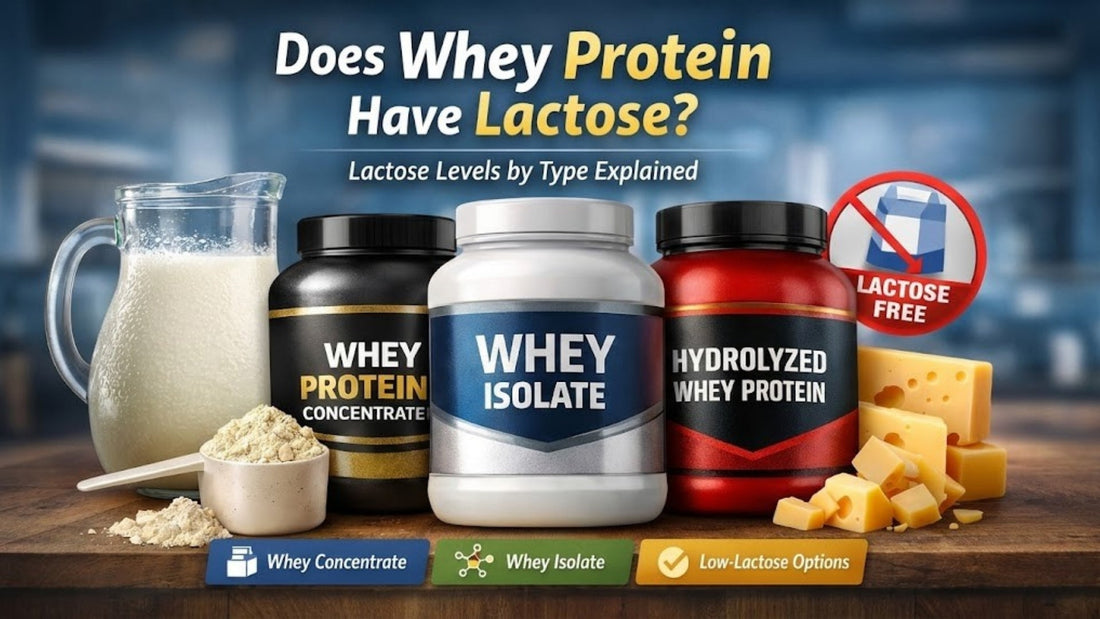
Whey protein powders are one of the most popular nutritional supplements on the U.S. market because they deliver a concentrated source of complete protein for athletes, older adults and people trying to improve their body composition. Yet because whey is derived from cow’s milk, many customers at Nutritional Supplement Shop ask whether whey protein contains the milk sugar lactose and how that affects individuals with lactose intolerance. This article explores how whey protein is made, how much lactose remains in the finished product and how to choose the right supplement for your goals.
What Is Whey Protein?
Milk is composed of two main proteins casein and whey. During cheesemaking special enzymes separate milk into solid curds and liquid whey. The liquid whey is pasteurized and dried to create the whey powder that ends up in shakes, protein bars and other foods. Whey is considered a complete protein because it contains all nine essential amino acids.
Does Whey Protein Contain Lactose?
Lactose is the natural sugar found in milk, and many adults lack sufficient lactase enzyme to digest it. If you’ve ever finished a shake and caught yourself wondering do protein shakes causes constipation?, the lactose left in some whey powders can be one piece of the puzzle. According to dairy industry sources, whey protein concentrate contains roughly 70-80% protein and retains some lactose, usually 3-8 grams per serving. Whey isolate undergoes additional processing to remove most of the fat and sugar, leaving at least 90% protein and less than 1 gram of lactose per serving. Hydrolyzed whey, which is pre-digested to break down large peptides, generally contains the least lactose of all because it is further refined.
Types of Whey and Their Lactose Content
Three forms of whey are commonly sold:
|
Whey type |
Protein content & lactose level |
Notes |
|
Whey concentrate |
About 70‑80 % protein; contains lactose and fat |
Most economical and retains more vitamins and minerals; not ideal for people with moderate to severe lactose intolerance |
|
Whey isolate |
At least 90 % protein; contains very little lactose (often <1 g/serving) |
Better choice for individuals who have trouble digesting lactose; tends to be more expensive |
|
Hydrolyzed whey |
Predigested proteins; lowest lactose content |
Quickly absorbed; often used in medical or infant formulas |
Because each form has a different lactose level, people who are mildly lactose intolerant may tolerate isolate or hydrolysate even if concentrate causes discomfort.
Why Lactose Matters: Lactose Intolerance Explained?
Lactose intolerance affects up to 65 % of the global population. Without enough lactase enzyme, undigested lactose ferments in the gut, leading to symptoms like bloating, gas and diarrhea. If you know you are lactose intolerant, selecting supplements with minimal lactose is essential.
Choosing the Right Whey Protein
When browsing our collection of protein supplements you’ll notice that we stock both whey concentrates and isolates. As a rule of thumb:
-
Mild Intolerance: Many people with only mild digestive discomfort when consuming dairy can enjoy whey concentrate by consuming smaller portions or pairing it with the amino acid supplements that support digestion. However, watch for added ingredients that may contribute additional lactose or sugars.
-
Moderate to Severe Intolerance: Our whey isolates offer high protein with very low lactose. They undergo extra filtration to remove most of the sugar and fat. Look for “whey isolate” on the ingredient panel and avoid blends if you need to limit lactose.
-
Hydrolyzed Whey and Specialty Formulas: Hydrolysates provide the easiest digestion by breaking proteins into smaller peptides. They cost a little more but may be worth it for sensitive individuals.
Our team can also help you explore dairy free alternatives such as plant based proteins. For example, check out our fat burners and energy products that pair vegan proteins with metabolism supporting ingredients.
Benefits of Whey Protein
Regardless of lactose content, whey protein offers numerous benefits for active lifestyles:
-
Muscle Building: Whey supplies high levels of leucine, a branched chain amino acid that stimulates muscle protein synthesis. Supplementing with whey helps provide the building blocks for muscle growth and recovery.
-
Anabolic Hormone Response: Consuming whey triggers the release of anabolic hormones such as insulin, supporting muscle growth.
-
Satiety and Weight Management: Protein promotes feelings of fullness, which can aid weight control. Whey may help improve body composition when combined with resistance training.
-
Convenience: Whey powders mix easily and provide a rapid source of amino acids. They’re ideal before or after workouts or as a snack between meals.
For athletes looking to take training up a notch, pairing whey with our pre workout supplements or creatine products can improve performance and muscle power. Those seeking hormonal support might combine whey with targeted testosterone boosters or growth hormone support as part of a structured program.
What If You’re Lactose Intolerant?
Try Whey Isolate or Hydrolyzed Whey
As noted above, whey isolate contains little lactose, and hydrolysate even less. If whey concentrate causes digestive issues, an isolate may still work for you. Start with a half serving and assess tolerance. Those with very sensitive digestion may benefit from plant based proteins instead.
Explore Lactose Free Protein Options
At Nutritional Supplement Shop, we recognize that some athletes prefer to avoid dairy entirely. In addition to whey isolates, we offer vegan proteins and collagen. Browse our non hormonal muscle builders and peptide supplements collections for alternatives that support muscle growth without lactose.
How to Incorporate Whey Protein Into Your Diet?
There’s no need to limit yourself to plain shakes. Try adding whey powder to smoothies, oatmeal or even baked goods. Mix a scoop into pancake batter or stir a flavored isolate into yogurt. Our customers also love blending whey with amino acid supplements for intra workout drinks. If you want a one stop solution, check out our post cycle therapy products, which often combine proteins with nutrients that support hormone balance and recovery.
For athletes who train hard, combining whey with a quality pre workout and then using post workout formulas can speed recovery. And don’t forget supportive categories like smelling salts and training accessories to elevate your gym session.
Other Nutritional Considerations
Many whey supplements on the market are flavored with added sugars and artificial ingredients. Reading labels is critical because some products include more lactose and fats than others. Choose brands that are transparent about their ingredients and consider combining whey with supportive nutrients. Our health and wellness line includes vitamins, minerals and joint support to complement your protein regimen. If you’re managing calorie intake or have concerns about stimulants, you may prefer our stimulant free pre workout options found in the pre workout collection.
Conclusion
Whey protein is not inherently lactose free concentrate forms retain several grams of lactose per serving. However, whey isolates and hydrolysates provide high quality protein with very little lactose, making them suitable for many individuals with lactose intolerance. When choosing a product, consider your tolerance level, nutritional needs and budget. At Nutritional Supplement Shop, we stock a curated selection of whey concentrates, isolates and dairy free alternatives, along with supportive products like amino acid supplements, fat burners and energy products, testosterone boosters and training accessories. Visit our store to find the right protein supplement for your goals and don’t hesitate to reach out to our team with questions. For those with lactose intolerance or dietary restrictions, consult a healthcare professional before starting any new supplement regimen.
Frequently Asked Questions.
Everything you need to know about this topic.
Yes, whey protein can contain lactose depending on the type you choose. Whey concentrate retains more lactose, while whey isolate and hydrolyzed whey contain very little lactose, making them easier to digest for people with lactose sensitivity. :contentReference[oaicite:0]{index=0}
People with lactose intolerance may be able to use whey isolate or hydrolyzed whey, as these forms have minimal lactose. Those with more severe intolerance may prefer plant-based protein alternatives. :contentReference[oaicite:1]{index=1}
Lactose matters because many adults have low levels of lactase enzyme needed to digest lactose. Undigested lactose can cause symptoms like bloating, gas, and diarrhea for those with intolerance. :contentReference[oaicite:2]{index=2}
Not all whey proteins are suitable. Whey concentrate has higher lactose levels, while whey isolate and hydrolysates are processed to have low lactose, which may be tolerated better. :contentReference[oaicite:3]{index=3}
Whey protein concentrate may contain several grams of lactose per serving, whereas whey isolate often has less than one gram, and hydrolyzed whey typically contains the least. :contentReference[oaicite:4]{index=4}