
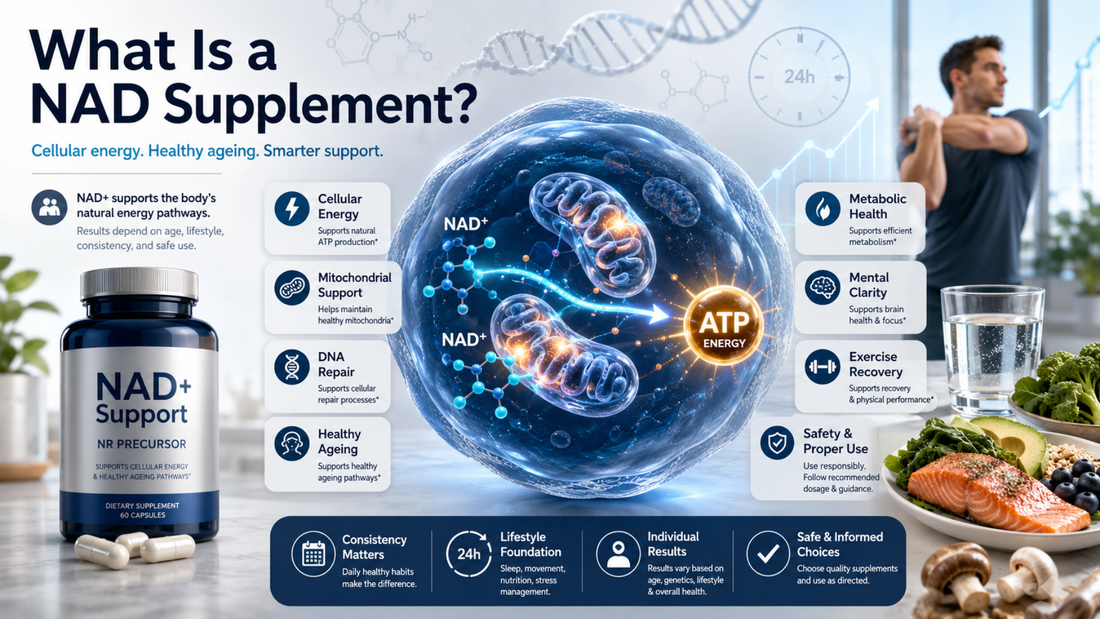
You're sleeping seven hours, eating reasonably well, and hitting the gym when life allows. But somewhere in your late thirties or forties, something quietly shifts. The energy that used to come easily just… doesn't show up the same way anymore. Recovery takes longer. Mental sharpness feels a little off.
For millions of Americans, that shift isn't just a lifestyle problem. It's a cellular one, and that's exactly where NAD supplements enter the conversation.
What Does NAD Actually Stand For?
NAD stands for nicotinamide adenine dinucleotide. It sounds complicated, but the concept is straightforward: it's a coenzyme found in every single cell in your body, and it's essential for keeping those cells running efficiently.
Think of NAD as a molecular delivery truck. It picks up electrons when your body breaks down food, then shuttles them to your mitochondria, the organelles that produce ATP, your body's primary energy currency. Without NAD doing that job, your cells struggle to generate energy efficiently.
But energy isn't all it manages. NAD also:
- Activates proteins called sirtuins, which regulate cellular aging and stress responses
- Powers PARP enzymes, which repair broken DNA strands caused by UV exposure, metabolic stress, and normal cell division
- Plays a role in circadian rhythm regulation, which connects to sleep quality and metabolic timing
Quick Take
- NAD = nicotinamide adenine dinucleotide
- A coenzyme found in every cell of the human body
- Central to energy production, DNA repair, and cellular aging
- Shuttles electrons to your mitochondria to make ATP
Why NAD Levels Matter and What Happens When They Drop?
Here's the part that's most relevant for most adults: NAD levels decline significantly with age.
Research shows that by your mid-fifties, your cellular NAD may be roughly half of what it was in your twenties. And that decline doesn't wait until you're older; it starts as early as your thirties. On top of that, several lifestyle factors accelerate the drop:
- Chronic stress
- Poor dietary habits
- Alcohol consumption
- Exposure to environmental toxins
- Sedentary behavior
When NAD is depleted, your cells have less fuel to work with. The downstream effects are a slower metabolism, reduced physical and mental energy, impaired DNA repair, and markers that researchers associate with accelerated aging. This is why NAD has become one of the most discussed molecules in longevity science, not because it's a magic fix, but because the underlying biology is well-documented and increasingly supported by human studies.
What Is a NAD Supplement, Really?
Here's an important distinction most articles skip over: when you take a "NAD supplement," you're usually not taking NAD directly.
NAD itself is a large molecule that absorbs poorly when taken by mouth. So most supplements deliver NAD precursors, smaller molecules that your body converts into active NAD+ once they're inside your cells.
The three main precursor forms used in supplements today are:
-
NR (Nicotinamide Riboside)
A form of vitamin B3. The most clinically studied NAD precursor, with the strongest human evidence base. Readily absorbed, well-tolerated, and widely available as a legal dietary supplement in the U.S. -
NMN (Nicotinamide Mononucleotide)
Another B3-related precursor is one metabolic step closer to NAD in the conversion pathway. Promising in some studies, but currently under FDA scrutiny in the U.S. regarding its classification as a dietary supplement versus a drug candidate. Availability and legality may vary. -
NADH (NAD + Hydrogen)
The "reduced" form of NAD. Found in some supplements marketed specifically for chronic fatigue. Less extensively studied than NR for anti-aging applications.
For most Americans looking for evidence-backed NAD support right now, NR-based products are the most defensible choice.
Quick Take
- You're taking a NAD precursor, not NAD itself (poor oral absorption)
- NR is the most studied and legally available form in the U.S.
- NMN is under FDA review; verify legality before purchasing
- NADH is used more specifically for fatigue-related applications
NAD, NMN, and NR: What Is the Difference?
This is one of the most Googled points of confusion about NAD supplements, and it's worth clearing up clearly.
|
NAD+ |
NR |
NMN |
|
|
What it is |
The active coenzyme |
Vitamin B3 precursor |
B3 precursor, closer to NAD |
|
Oral absorption |
Poor, not taken directly |
Good |
Variable |
|
Human studies |
N/A |
40+ clinical trials |
Fewer regulatory uncertainties |
|
U.S. legal status |
N/A |
Recognized dietary supplement |
Under FDA review |
NR wins on current evidence. Brands using NR, particularly patented NIAGEN NR, have the backing of multiple randomized, controlled human trials demonstrating safe and consistent NAD+ elevation. NMN is promising, but its legal status in the U.S. remains unresolved. Your safest, most evidence-supported choice right now is an NR-based product from a third-party tested brand.
What Are the Potential Benefits of NAD Supplements?
Let's be honest: the science on NAD supplements is promising but still developing. Not every claimed benefit has been confirmed in large-scale human trials. Here's what current research actually supports:
Cellular Energy and Fatigue Reduction
Clinical trials show that NR supplementation reliably raises blood NAD+ levels. For many adults, especially those over 40, this may translate into reduced fatigue and more consistent energy throughout the day. Some studies have also shown improvements in muscle insulin sensitivity, supporting how your body uses fuel during activity.
Healthy Aging at the Cellular Level
Sirtuins, enzymes activated by NAD, play a role in cellular maintenance and longevity responses. Supporting NAD may help sustain sirtuin function, which researchers believe influences how cells respond to stress and age. This is an active area of longevity research, though human evidence for lifespan extension remains preliminary.
DNA Repair Support
NAD is a required cofactor for PARP enzymes, which detect and repair broken DNA strands. Supporting adequate NAD may help your cells address daily genomic damage more effectively, from UV radiation, metabolic byproducts, and ordinary cell division.
Metabolic Health
Several studies have shown that NAD precursors may improve markers of metabolic health, including insulin sensitivity and inflammation markers. This is particularly relevant for adults managing weight, blood sugar, or metabolic concerns. If you're exploring other metabolism-focused supplements, take a look at our in-depth guide on 5-Amino-1MQ: NNMT Inhibitor for Weight Loss & Metabolism for a complementary perspective on cellular metabolic support.
Cognitive Clarity
Some preliminary data and a consistent pattern of user reports suggest NAD support may improve mental sharpness and reduce brain fog. This is physiologically plausible; your brain has some of the highest energy demands of any organ in the body, making it particularly dependent on mitochondrial efficiency.
If you're also comparing other antioxidant-based options for cellular and cognitive health, our breakdown of Quercetin Versus CoQ10 covers two popular alternatives worth knowing about.
Recovery After Exercise
Active adults and athletes report faster post-training recovery with consistent NAD supplementation. Given that mitochondrial function is central to how quickly muscles regenerate after stress, the rationale holds up physiologically, even if sport-specific clinical trials are still limited.
Quick Take
- Most consistent evidence: NAD supplements raise blood NAD+ levels (especially with NR)
- Potential benefits include energy, metabolism, DNA repair, and aging support
- Anti-aging effects are promising but not yet proven definitively in humans
- Results depend on age, health baseline, and consistency of use
What Is the Best NAD Supplement Brand?
With dozens of options on the market, here's how to separate the credible from the overhyped.
Tru Niagen is currently the most rigorously studied NAD supplement brand available. It uses NIAGEN® NR, a patented, clinically evaluated form of nicotinamide riboside. In a well-documented clinical trial, 300mg daily raised NAD+ blood levels by over 50% within two weeks, with levels maintained throughout the 8-week study. At 1,000mg, elevations reached up to 150%.
What to look for in any NAD supplement:
- Uses NR (nicotinamide riboside) as the active ingredient
- Includes the specific dose on the label, no hidden proprietary blends
- Third-party tested for purity and potency (NSF, Informed Sport, or USP certification)
- Manufactured in a GMP-certified (Good Manufacturing Practice) facility
- Backed by published human studies, not just animal data
If you're also comparing NAD against stimulant-based energy support products, our guide on what pre-workout supplements do explains how caffeine-driven energy differs from the cellular, mitochondrial approach NAD takes.
How Much NAD Should You Take?
There is no officially established Recommended Daily Allowance (RDA) for NAD supplements yet. Dosing guidance comes primarily from clinical trials using NR:
- Standard dose: 250-300mg of NR per day, the most commonly studied dose
- Higher doses: Some trials used up to 1,000mg/day with proportionally greater NAD+ increases and no serious adverse events
- Timing: Morning is preferred, since NAD is tied to your circadian clock — taking it late in the day may disrupt sleep for some users
- With food: If you notice stomach discomfort, take it alongside a meal
Because there's no universal dose that suits everyone, your doctor may suggest starting at 300mg and adjusting based on how you respond. If you're stacking multiple supplements - for example, pairing NAD with a pre-workout on training days, take them at different times and monitor how each affects you.
Are NAD Supplements Safe? Side Effects to Know
NR-based NAD supplements are generally well-tolerated in healthy adults. Multiple clinical trials have been completed without serious adverse events at standard doses. That said, side effects are possible, particularly at higher doses or in sensitive individuals:
- Nausea or mild stomach discomfort
- Headaches, especially early in supplementation
- Temporary fatigue as the body adjusts
- Sleep disruption if taken too late in the day
- Muscle discomfort
One important note: supplements using niacin (a different form of vitamin B3) can cause uncomfortable skin flushing and, at chronically high doses, may stress the liver. NR does not cause flushing, which is one key reason it's preferred in well-formulated NAD products.
If you develop any symptoms that persist beyond the first week or two, stop taking the supplement and talk to your doctor before resuming.
Who Should Not Take NAD Supplements? (Safety Block)
Talk to your doctor before taking NAD supplements if you:
- Have liver or kidney disease - these organs metabolize NAD precursors and may be burdened by supplementation
- Are pregnant or breastfeeding - there is insufficient safety data; avoid unless directed by a physician
- Are under 18 - NAD supplements are formulated and studied in adults
- Take prescription medications - particularly for diabetes, blood sugar, or inflammatory conditions
- Have a history of hormone-sensitive conditions - some cellular pathways activated by sirtuins involve hormonal signaling
Warning signs that require medical attention:
- Jaundice (yellowing of skin or eyes) or upper right abdominal pain, possible liver involvement
- Severe or persistent digestive distress
- Signs of allergic reaction: rash, hives, swelling of the face, throat tightness, or difficulty breathing
Seek immediate medical care if you experience any allergic reaction symptoms. For non-urgent concerns, contact your healthcare provider before continuing use.
For a broader look at safety considerations around advanced supplement categories, our detailed article on Are Peptides Safe? walks through a similar framework that applies well to newer supplement ingredients.
When Should You Take a NAD Supplement?
Timing matters more than people realize with NAD. Here's the practical guide:
- Take it in the morning. NAD is directly connected to your body's circadian clock. Morning dosing aligns with your natural energy cycle and avoids potential sleep interference.
- Take with food if needed. If you experience any GI discomfort on an empty stomach, a meal helps.
- Be consistent. Clinical data show it takes at least two weeks to meaningfully raise NAD+ blood levels. Don't judge results after a few days.
- Avoid stacking with high-stimulant products at the same time. If you're also using a high-stimulant pre-workout on training days, check out our full breakdown of The Truth About High Stim Pre-Workouts so you understand what you're combining.
Can You Get NAD From Food?
Yes, your body synthesizes NAD naturally from dietary tryptophan and vitamin B3. Foods that contribute to NAD production include:
- Chicken and turkey
- Tuna and salmon
- Dairy products
- Mushrooms (especially cooked)
- Green vegetables and legumes
The practical limitation: dietary amounts are generally not sufficient to counteract the age-related decline in cellular NAD levels that occurs from your thirties onward. That's the gap supplementation is designed to address, particularly for adults over 40 who want a more active approach to cellular energy support.
Frequently Asked Questions
1. What does a NAD supplement actually do in your body?
NAD supplements deliver precursor molecules, usually NR, that your cells convert into active NAD+. Once converted, NAD+ helps mitochondria produce energy (ATP), activates proteins that regulate cellular aging, and supports DNA repair enzymes. Think of it as restoring the fuel your cells need to function at their best as you age.
2. Is NAD the same as NMN or NR?
No, they are related but different. NAD is the active coenzyme your cells use. NMN and NR are precursors your body converts into NAD. NR is currently the most researched and legally clear choice in the U.S., while NMN remains under FDA review regarding its status as a dietary supplement.
3. How long does it take for a NAD supplement to work?
Research using NR shows measurable increases in blood NAD+ levels within two weeks at 300mg/day. Functional improvements, like better energy or faster recovery, can take four to eight weeks of consistent daily use. Your doctor may suggest periodic testing to track your NAD levels objectively.
4. Can I take NAD supplements every day?
Yes. Clinical trials have evaluated daily NR supplementation at 300-1,000mg with no serious adverse events in healthy adults. Daily consistency is actually important; NAD levels are maintained through regular dosing, not just temporarily spiked.
5. Are there drug interactions with NAD supplements?
Potential interactions haven't been exhaustively studied. However, NAD metabolism overlaps with pathways involving blood sugar regulation, alcohol metabolism, and inflammation. If you take medications for diabetes, liver conditions, or blood pressure, check with your doctor before starting.
6. Who benefits most from NAD supplements?
Adults over 35 who notice age-related fatigue, slower post-exercise recovery, or metabolic concerns tend to show the most pronounced response. People with NAD depletion accelerated by stress, alcohol, or poor diet may also be particularly responsive.
7. Are NAD supplements worth it for athletes?
NAD sits at the core of how muscles produce and recover energy. While large athletic-population trials are still limited, the underlying physiology, mitochondrial efficiency, fuel production, and DNA repair after training stress support the rationale for use. Many active adults incorporate NAD alongside other cellular support strategies.
8. Can NAD supplements help with brain fog?
Some users report improved mental clarity with regular NAD supplementation, which is physiologically plausible given the brain's high energy demands. Formal clinical trials targeting cognitive outcomes in healthy adults are still limited. Your doctor may advise pairing it with other evidence-based cognitive support approaches.
9. Is there a difference between NAD+ and NADH supplements?
Yes. NAD+ is the oxidized, "empty" carrier form that accepts electrons. NADH is the "loaded" reduced form that carries electrons to the mitochondria. NADH supplements are sometimes used specifically for chronic fatigue syndrome. Most anti-aging and energy-focused products use NAD+ precursors like NR.
10. Do I need to cycle off NAD supplements?
There is no established cycling protocol for NR-based NAD supplements. Unlike stimulants or hormonal compounds, NAD precursors don't appear to cause tolerance or receptor desensitization. That said, if you're taking high doses long-term, it's reasonable to discuss your protocol periodically with your healthcare provider.
Conclusion
You now have a clear, honest picture of what NAD supplements are, why they matter as you age, how NR and NMN differ, and what to actually look for in a product. The next step is practical: if you're over 35 and dealing with energy dips, slower recovery, or metabolic concerns, an evidence-backed NR-based supplement like Tru Niagen is worth discussing with your doctor, especially if this is part of a broader approach to healthy aging.