
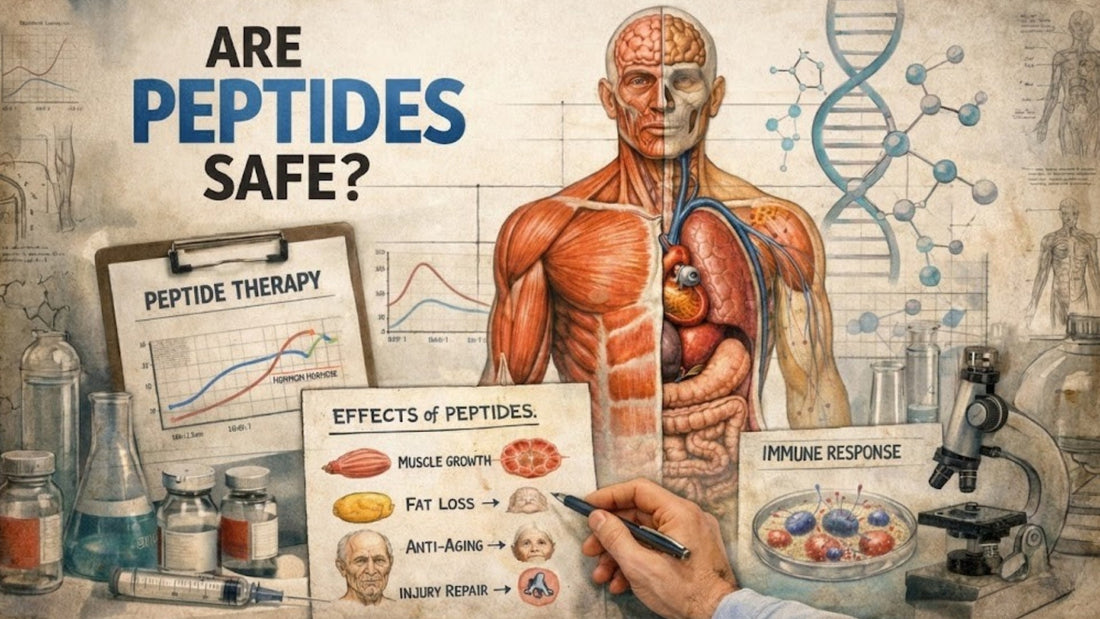
Peptides have become buzzwords in health and fitness circles. These short chains of amino acids act as messengers in the body, helping cells communicate and regulating processes such as immunity, metabolism and tissue repair. Scientists are harnessing peptides to mimic or enhance these natural functions; some, like glucagon like peptide 1 (GLP 1) agonists, are FDA approved for type 2 diabetes and weight loss, while others remain experimental. As consumers in the United States look for new ways to support muscle growth, fat loss or anti aging, the question arises are peptides safe? Understanding how peptides work and how to use them responsibly is essential before adding them to your wellness routine.
What are Peptides and Why use them?

Peptides are strings of 2-50 amino acids linked by peptide bonds. Because they are smaller than full proteins, peptides can pass more easily through cell membranes and act quickly in the body. The body produces peptides naturally for diverse roles:
-
Cell Signalling: Peptides carry messages between cells to regulate functions such as hormone release or immune responses.
-
Metabolic Control: Hormones like insulin and glucagon are peptides that control blood sugar and energy use.
-
Tissue Growth and Repair: Growth factor peptides stimulate muscle and connective tissue repair after exercise.
Scientists can synthetically produce peptides to replicate or enhance these processes. For example, peptides like CJC 1295/Ipramorelin support growth hormone release, while AOD 9604 targets fat breakdown. At Nutritional Supplement Shop, we carry a range of peptide supplements that fit into wellness plans, such as Bepecin capsules for gut and tissue support and KPV tablets for immune health. Peptides are also added to pre workout formulas and protein powders to support recovery and lean mass maintenance.
Do Peptides are Safe?
The short answer is peptides can be safe when used appropriately. Medical professionals consider peptide therapy generally safe when peptides come from reputable sources and are administered under the supervision of a knowledgeable healthcare provider. Clinics reporting more than a decade of peptide therapy note minimal complications when they follow strict sourcing and monitoring protocols. Similarly, wellness centers explain that peptide therapy is safe when a trained professional selects the right peptides and dosage for the patient and monitors progress. Side effects are usually mild and may include temporary injection site reactions, headaches or digestive discomfort.

However, there are important caveats:
-
Side Effects and Individual Response: While most people experience minor issues, certain peptides can cause increased appetite, elevated blood sugar, fluid retention and other metabolic effects. Growth hormone secretagogues (GHSs) may also decrease insulin sensitivity. Individuals who are pregnant, breastfeeding or taking medications should consult a physician before using peptides.
-
Quality and Source Matter: Misuse of peptide hormones from unregulated sources can lead to contamination, incorrect dosing or mislabeled ingredients. Products marketed for muscle growth, anti aging or fat loss may be sold as “research chemicals” and lack quality control. At Nutritional Supplement Shop we only sell peptides from established brands and third party tested manufacturers. Consumers should avoid black market peptides and choose authentic products from reputable vendors.
-
Regulation and Legality: Only certain peptides are FDA approved for specific medical conditions. Many synthetic peptides marketed online fall outside regulatory oversight; some are even prohibited by the World Anti Doping Agency (WADA). Using banned growth hormone secretagogues can jeopardize your athletic eligibility and pose unknown health risks. Choose peptides that comply with U.S. regulations and avoid off label uses.
-
Long term Safety is Unknown: Clinical studies on peptides are limited in size and duration, so scientists cannot fully assess long term effects. Experts caution that experimental peptides used in anti aging or longevity clinics lack extensive human data; their long term safety remains unknown. That’s why continuous monitoring and periodic health assessments are essential when using peptide therapy.
How to use Peptides Responsibly?

If you’re considering peptides for muscle growth, fat loss, injury recovery or longevity, follow these guidelines to stay safe:
-
Consult a Healthcare Professional. Discuss your goals, medical history and current medications with a qualified provider. Professionals will determine whether peptide therapy is appropriate and select the right peptide type and dosage.
-
Choose Reputable Products. Purchase from established retailers. Our health and wellness collection and growth hormone support section offer third party tested peptides, ensuring purity and accurate labeling.
-
Use Peptides as part of a Holistic Plan. Combining peptide therapy with a balanced diet and exercise enhances results. Pair your peptide regimen (you can take help of Peptide Calculator) with quality protein powders, amino acid supplements and sleep support formulas to optimize recovery and performance.
-
Monitor Your Response. Keep track of changes in energy, mood, body composition and blood markers. Regular medical checkups and blood work help detect potential side effects early. If you experience persistent adverse effects like hormonal imbalance, fatigue or cardiovascular changes, stop using the peptide and consult your doctor.
-
Avoid Banned or Experimental Peptides. Stay away from peptides that lack FDA approval or are on the WADA prohibited list. For example, some growth hormone secretagogues sold for bodybuilding have limited research and unknown safety profiles. Instead, choose legally approved options and focus on natural muscle building supplements.
Common Types of Peptides and their Uses
Below are some popular peptide categories and how they can support your wellness goals. Always verify that any supplement you choose is third party tested and legal.
|
Peptide type |
Potential benefits (evidence & limitations) |
Complementary products from our store |
|
Bepecin |
Derived from a body‑protective compound; studied for supporting gut healing and connective tissue repair. Preliminary research suggests it may promote healing of tendons and gut lining, but human data are limited. |
Our lab‑certified Bepecin capsules pair well with joint‑health supplements and anti‑inflammatory formulas. |
|
KPV (α‑melanocyte–stimulating hormone fragment) |
May support immune modulation and gut health. Research is still emerging and proper dosing requires professional guidance. |
Try KPV peptide tablets along with probiotic supplements to maintain a healthy microbiome. |
|
Growth‑hormone secretagogues (GHSs) like CJC‑1295 or Ipamorelin |
Aim to stimulate natural GH release, potentially enhancing muscle growth and fat loss. However, their safety has not been established; side effects include increased appetite, elevated blood sugar and fluid retention. GHSs are banned in professional sports. |
If you pursue GHSs, work closely with a doctor and purchase only legal products. Pair them with high‑quality proteins and pre‑workout supplements to support training. |
|
GLP‑1 receptor agonists (Semaglutide, Tirzepatide) |
FDA‑approved for type‑2 diabetes and weight management; help control appetite and blood sugar. Side effects can include nausea and long‑term safety requires more data. |
Not currently sold over the counter; discuss prescription options with your healthcare provider. Complement your program with fat burners and fiber supplements for metabolic support. |
|
Collagen and bioactive food peptides |
Naturally occurring peptides found in foods like collagen and whey protein. These are considered safe as they come from dietary sources and support skin, joint and muscle health. |
Explore our protein collection for collagen peptides, whey isolates and casein blends. Combine them with training accessories for best results. |
Final thoughts
Peptides are an exciting frontier in health and performance, offering targeted ways to support muscle growth, fat loss, healing and longevity. Current evidence suggests that peptides are safe when sourced from reputable manufacturers and used under medical supervision. Nonetheless, the long‑term safety of many synthetic peptides is still unclear, and misuse of unregulated or banned peptides can lead to serious health risks. To make peptides part of your wellness journey, work with a qualified healthcare provider, choose high‑quality supplements like those offered at Nutritional Supplement Shop, and integrate them into a comprehensive lifestyle that includes whole foods, exercise and sufficient rest.
Whether you’re interested in peptide therapy, amino acid supplements, creatine boosters or non hormonal muscle builders, our USA based store offers authentic brands only and third party tested products to help you achieve your goals safely. Reach out to our team for personalised recommendations and enjoy free U.S. shipping on orders over $65.
Frequently Asked Questions.
Everything you need to know about this topic.
Peptides are short chains of amino acids. In the body, they can act as signaling messengers that influence processes like hormone activity, metabolism, immune response, and tissue repair.
Peptides can be safe when the right product is used at an appropriate dose and guided by a qualified healthcare professional. Risk increases when peptides are used without medical oversight or sourced from unverified sellers.
Side effects vary by peptide and route of use, but commonly reported issues include injection site irritation, headaches, and digestive discomfort. Some peptides may also affect appetite, fluid balance, or blood sugar.
Anyone who is pregnant or breastfeeding, has a chronic medical condition, is taking prescription medications, or has a history of hormone sensitive conditions should speak with a clinician before using peptides.
Some peptide based medications are FDA approved for specific medical conditions and are available only by prescription. Many other peptides marketed online are not FDA approved for human use, and products sold as research use only may be unsafe or illegally marketed.
Peptides are sensitive compounds, and quality problems can include contamination, incorrect strength, or mislabeled ingredients. Choosing verified sourcing and clear quality controls helps reduce preventable risks.
Some performance related peptides and hormone pathway peptides can be prohibited in sport under anti doping rules. If you compete, check the current prohibited list and avoid any substance that could trigger a violation.
Use medical guidance, confirm legality where you live, choose reputable sourcing with quality testing, start only with a clinician informed plan, and monitor your response. Stop use and seek medical advice if adverse effects occur.
Collagen peptides are dietary protein fragments commonly used for skin and joint support and are generally treated as food derived supplements. Synthetic or drug like peptides can have stronger targeted effects, more regulatory complexity, and potentially higher risk when used without medical supervision.