
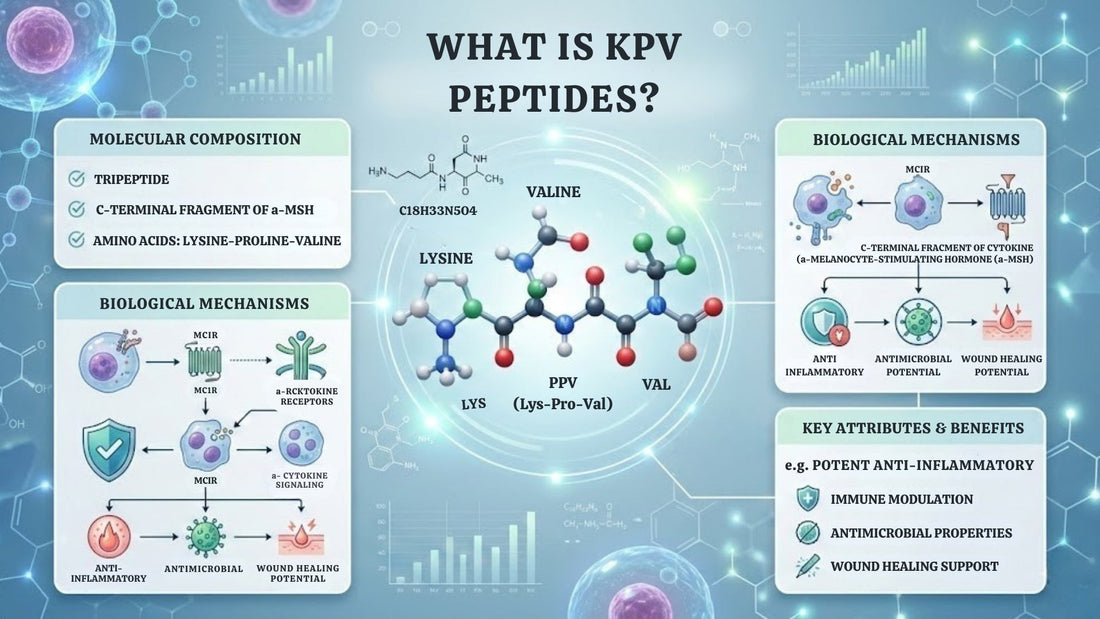
Peptides are short chains of amino acids that act as biological messengers. One of the most talked about tripeptides today is KPV, a fragment of the hormone α MSH composed of lysine, proline and valine. Researchers note that KPV’s small size allows it to bind precisely to receptors and avoid some of the side effects seen with larger peptides. In functional medicine circles it is often praised for its ability to calm inflammation, support immunity and help the gut heal.
How KPV Works?
KPV’s primary mode of action is its ability to dampen the NF κB pathway, the master switch that drives pro inflammatory cytokines such as TNF α and IL 6. By suppressing this pathway, KPV reduces inflammatory gene expression without broadly suppressing the immune system. Studies in cell cultures and animal models show that KPV also kills common pathogens like Staphylococcus aureus and Candida albicans while preserving immune activity. Because it modulates rather than suppresses immune activity, practitioners are exploring it for conditions where infection and inflammation coexist.
Benefits of KPV Peptide
Potent Anti inflammatory Effects
When inflammation becomes chronic, it can lead to cardiovascular disease, chronic obstructive pulmonary disease, cancer and neurodegenerative disorders. KPV’s ability to down regulate NF κB and TNF α suggests it may be useful for taming systemic inflammation, especially in the gut and lungs. A review published in 2025 notes that it reduces cytokine production, inhibits neutrophil migration and modulates the immune response.
Skin Health and Wound Healing
The melanocortin 1 receptor (MC1R), which binds α MSH, is also expressed in skin cells involved in wound repair. In animal studies, topical KPV accelerated corneal wound closure and stimulated epithelial cell growth. Practitioners therefore use KPV for chronic skin conditions such as psoriasis, eczema and dermatitis. It is sometimes combined with creams for Bepecin or TB 500 peptides for enhanced tissue repair.
Gut Integrity and Immune Balance
Another exciting area of research is gastrointestinal health. KPV appears to strengthen the intestinal barrier, reduce inflammatory signaling and improve tight junction integrity. Functional medicine clinics use it for leaky gut, inflammatory bowel disease (IBD) and histamine intolerance. Because it modulates mast cell activity without suppressing immunity, KPV may be helpful for autoimmune flares and eosinophilic gastrointestinal disorders.
Neuroprotection and Oxidative Stress
Emerging evidence suggests KPV may reduce neuroinflammation and oxidative stress. Practitioners are experimenting with intranasal KPV for migraines, brain fog and mood disorders. While human data are limited, animal studies indicate that dampening inflammatory signaling in the brain could benefit neurodegenerative concerns.
Dosing, Formats and Safety
KPV can be delivered by injection, oral capsule, topical cream or nasal spray. Injectable KPV is typically reconstituted from a dry powder and dosed at ~0.2–0.5 mg per day. Oral or topical formulas may provide between 1 mg and 5 mg daily. Because it has not been extensively studied in humans, no universal protocol exists; clinicians usually tailor dosing based on individual needs. Common side effects include mild injection site reactions or transient flu like symptoms. Pregnant or breastfeeding women and people with a history of cancer should avoid peptide therapy.
KPV and Creatine: A Synergistic Approach
Creatine is one of the most researched performance supplements for increasing ATP regeneration, strength and lean muscle mass. While creatine supports energy production and muscle growth, KPV’s strength lies in its anti inflammatory and healing properties. Combining the two may help athletes train harder and recover faster creatine fuels high intensity exercise, while KPV helps mitigate gastrointestinal and systemic inflammation from training stress.
At Nutritional Supplement Shop we carry both premium creatine formulas and research grade KPV peptides so you can build muscle and support recovery simultaneously.
Our Recommended Creatine Products
|
Product |
Format |
Key feature |
|
Powder |
99.5 % pure monohydrate for foundational muscle support |
|
|
Powder |
Cost‑effective tub for long‑term use |
|
|
Powder |
HPLC‑tested purity for serious lifters |
|
|
Flavored powder |
Lychee lemonade flavor with added pump ingredients |
|
|
Powder |
High‑value bulk creatine |
|
|
Powder |
Blended creatine forms for enhanced uptake |
|
|
Capsules |
Creatine plus nitric‑oxide boosters in convenient caps |
|
|
Tablets |
Nitrate form for improved muscle pumps |
|
|
Capsules |
Highly soluble hydrochloride for those sensitive to powder |
We also stock peptide formulas that pair well with KPV. For example, you can explore KPV Peptide Tablets or the convenient VitaPep KPV Peptide Solution. For comprehensive tissue support, consider Bepecin capsules, Bepecin topical serum or the Bepecin/TB‑500 nasal spray, all of which work synergistically with KPV to promote recovery.
Who Should Consider KPV Peptide?
KPV may be especially suitable for individuals experiencing chronic inflammation, persistent gut issues, skin disorders, or immune dysregulation. Functional medicine practitioners also employ it for cases of IBD, leaky gut, autoimmune disease, psoriasis, eczema and histamine intolerance. Because obesity, stress and aging contribute to heightened inflammation, people within these categories might see benefits when KPV is paired with lifestyle changes, adequate sleep and proper nutrition. However, it is not a first line therapy; more conventional interventions should be tried first, and a qualified practitioner should supervise its use.
Is KPV Legal and Safe?
KPV is not approved by the FDA for human consumption. The agency warns that there is no human exposure data to establish safety. Most products sold online are research grade and may contain impurities. To obtain pharmaceutical grade KPV legally, U.S. consumers must work with a clinician and meet strict criteria: they need a prescription and a documented condition for which no other treatment is adequate. At Nutritional Supplement Shop we offer KPV peptides for laboratory research only. If you’re looking to incorporate peptides into your wellness routine, we recommend speaking with a healthcare professional.
Takeaway
KPV is a fascinating tripeptide with strong anti inflammatory, antimicrobial and wound healing potential. Although human research is limited and regulatory hurdles remain, many functional medicine practitioners are excited about its ability to modulate immune responses while preserving healthy function. When paired with proven supplements like creatine, KPV may offer a comprehensive approach fueling your workouts and helping your body recover from the inside out.
We at Nutritional Supplement Shop are committed to offering high quality creatine formulas and research grade peptides for customers across the United States.
Frequently Asked Questions.
Everything you need to know about this topic.
KPV is a naturally occurring tripeptide made of lysine, proline, and valine. It is a fragment of alpha melanocyte stimulating hormone and is studied for its immune modulating and inflammation calming effects, especially in gut and skin related contexts.
KPV refers to the three amino acids in the tripeptide sequence: lysine, proline, and valine.
Research shows KPV can reduce inflammatory signaling by inhibiting pathways such as NF kappa B and related inflammatory cytokine activity. In intestinal and immune cells, studies also describe uptake through the PepT1 transporter with downstream reductions in inflammatory signaling.
KPV is most often studied for inflammation support, gut barrier and digestive support, immune balance, and skin related applications. Evidence is largely preclinical, so benefits discussed online should be treated as potential research findings rather than guaranteed outcomes.
Preclinical studies report that KPV can reduce inflammatory signaling and lower pro inflammatory cytokine activity in intestinal models, including reductions in colitis severity in animal models when delivered in study settings.
Some research on alpha melanocyte stimulating hormone fragments reports antimicrobial effects, including activity against organisms such as Staphylococcus aureus and Candida albicans in experimental settings.
KPV related melanocortin signaling has been studied in skin cells and wound related contexts. Some experimental work explores KPV for skin inflammation and barrier support, but this remains an emerging area with limited human clinical evidence.
KPV is commonly discussed in formats such as oral, topical, nasal, or injectable preparations depending on the setting. Dosing protocols vary widely, and there is no universally established human dosing standard, so decisions should be made with a qualified clinician when used in medical contexts.
Reported issues in non clinical use discussions can include mild injection site irritation and short lived flu like feelings. Because robust human exposure data are limited, safety and side effects are not fully characterized.
People who are pregnant or breastfeeding should avoid peptide therapy unless specifically directed by a licensed clinician. Anyone with a complex medical history, including cancer history or immune related conditions, should consult a healthcare professional before considering any peptide use.
KPV is not an FDA approved drug for marketed therapeutic use. The FDA has also stated it has not identified human exposure data for drug products containing KPV administered via any route in the context of certain compounding evaluations, so regulatory and quality risks can be significant depending on source and intended use.
Some people pair KPV with creatine because creatine supports training performance and cellular energy, while KPV is discussed for inflammation and recovery support. There is not strong clinical evidence on the combined use, so consider it experimental and consult a qualified professional if you plan to use peptides.